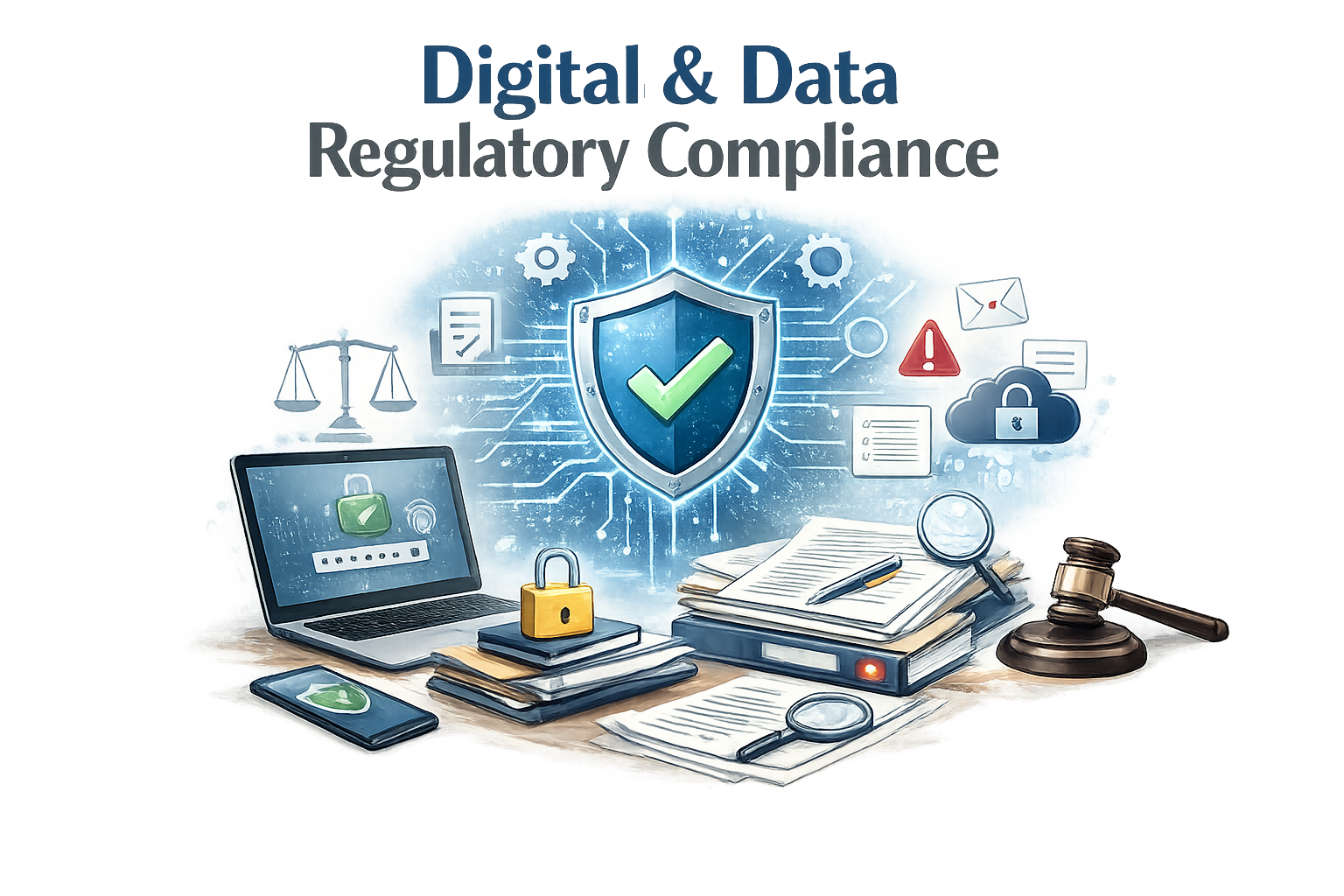
Digital & Data Regulatory Framework
A strategic approach to ensure your data collection fuels growth without inviting litigation.
What is a Data Regulatory Audit?
A Data Regulatory Audit is a comprehensive legal review of how your organization collects, processes, stores, and deletes personal and sensitive information.
It is not a cybersecurity penetration test; it is a Legal Rights Mapping. We analyze the "Legal Basis for Processing," the "Data Subject Rights," and the "Third-Party Data Transfer Agreements."
Whether you are a Fintech startup handling KYC or an E-commerce giant processing millions of orders, this ensures you are not just "secure," but Legally Compliant across all jurisdictions of operation.
The Three Pillars of Compliance
Our audit focuses on the most critical failure points in the digital data lifecycle:
1. Data Mapping & Inventory
We identify every point where data enters your system and where it resides. You cannot protect or comply with data you don't know you have.
2. Statutory Gap Analysis
We compare your current operations against the specific requirements of laws like the DPDP (India), GDPR (EU), and CCPA (USA) to find "blind spots."
3. Third-Party Risk Audit
We review the contracts (DPAs) you have with cloud providers, marketing tools, and vendors to ensure they aren't exposing you to vicarious liability.
How We Conduct the Audit
Our process is a blend of Forensic Data Analysis and Legal Jurisprudence. We follow a precise four-step workflow:
- Data Flow Discovery: We trace the journey of a single piece of user data from "Click" to "Storage" to "Deletion."
- Regulatory Cross-Referencing: We map your flows against the latest government notifications and court precedents.
- Risk Level Scoring: We categorize gaps as "Critical," "Moderate," or "Low Risk," providing an immediate roadmap for remediation.
The final output is a Compliance Roadmap that transforms your legal risks into a competitive advantage (Trust-as-a-Feature).
The "Legacy Data" Warning
The biggest risk is not the data you collect today, but the data you collected 5 years ago under outdated laws. Retaining "Zombie Data" without a current legal basis is the fastest way to trigger a regulatory fine.
Cleanse your databases before the regulators do. A proactive data purge is cheaper than a legal defense.